

Bart Nukes the Defaults
Selecting defaults is faster. Records are still records

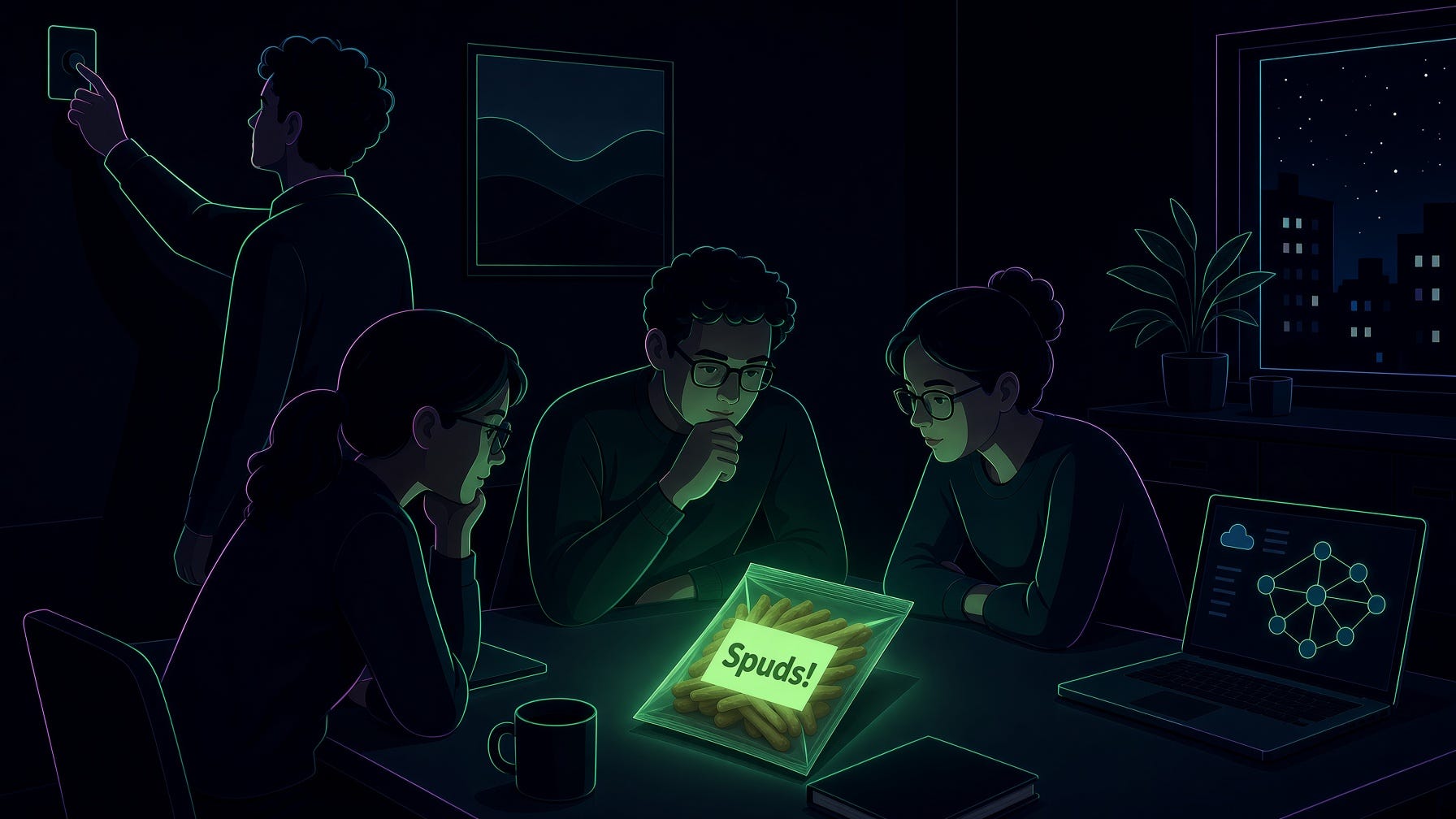
JJ was excited before the Tuesday 10 O'clock morning meeting started.
Georgie Handle was introduced with great fanfare as the new project manager for new initiatives and to help Loo Loo’s Paper Parts compete at the next level. She did not know much about the cloud yet but was eager to learn. She noted Bart’s expertise and Raja’s offer to help her fit into the team quickly. She was planning a buffet lunch with Raja and Selena to learn as much about cloud infrastructure as one meal would allow.
She did not want to waste any time.
JJ Glowed in the Dark
JJ took the floor. He and Selena had come back from a sales seminar on industrial methodologies.
“Selena and I have seen the future,” JJ said. “Colourized biodegradable bags with glow-in-the-dark labels for frozen food. This is a huge differentiator. Colour-coded frozen food with eco-friendly labeling. We could be known across New Brunswick as a food supplier and a cleaner-upper.”
He paused to compose himself.
Selena had heard about another concept at the seminar too.
“Cloud native containers. In any language you want. Our potential supplier, Bagit!, has a sample software deployment on GitHub we can use to test this concept. It produces artwork, order handoffs, and other specifications still to be defined.”
JJ nodded. “Just to confirm. Bagit! manufactures the biodegradable bags and glow labels. We design the product line and the branding. Then we hand the orders back to Bagit!”
Georgie spoke quietly into her phone. “Resin film. Cold chain packaging. Primary colour fusion. Draft an environmental sales pitch for McCain Foods.”
Selena opened her notebook and wrote colour-coded food is just weird. I’m sooo hungry!
Raja said, “I just watched a YouTube short on using GitHub for proof of concepts. We can use our test AWS account for this.”
Bart stood up, walked to his fourth monitor, and thought about running a full calibration.
Containing the Containers
Bart liked containers as the compute choice. He ran Kubernetes in his home lab as the Minecraft game-server operator for his condo. Standing up full orchestration for this pilot still looked like a waste of time. He was also busy with monthly backups and cost analysis.
He recommended Fargate to orchestrate and manage the pilot containers.
He also built an automation script for Raja: approved network layout, private space for required services and the database, security group rules matched to the pilot requirements.
“Run this script,” Bart said. “Do not invent a network in the console.”
Georgie Makes Her Move
Georgie stopped Raja in the hallway after the meeting.
“Let’s forget lunch with Selena,” she said. “Since I’m new to this cloud thingy, let’s spin the pilot up manually. If we only run automation, I won’t see what is happening. Show me the steps. I’m a quick learner of using confusing technical terms, and my glow-in-the-dark presentation is Friday.”
Raja said he could stand it up fast. He wanted to follow Bart’s instruction. He also wanted to impress Georgie.
“I’m here to listen and learn from your expertise,” Georgie said softly.
Raja answered carefully. “Sometimes defaults have been created for a good reason, right?”
He used the default network instead of Bart’s automation. He attached to Git, pushed the deploy, and accepted the default security groups. He added a compatible database.
The included fake data looked too fake. So Raja loaded records from ten years ago. Old orders. Old contacts. Old SKUs. No current customer files.
“Too old to worry about,” he told Georgie.
“I’m impressed you still have records from ten years ago,” Georgie said.
Thursday afternoon the demo worked. JJ dimmed the room lights. The label artwork glowed. Raja exhaled. Georgie tapped Raja’s wrist. “Yeah. Containers,” she whispered.
Selena marked the pilot as up. JJ grabbed a green Post-it and wrote: eco-worthy differentiator coming at you fast!
Nobody marked the pilot as being built from the approved script. Nobody marked ten-year-old records as potentially still private information.
We Have Your Data
Friday morning Selena’s phone buzzed on the table during standup.
The pilot database had been accessed and encrypted. The encryption key had been copied externally and then deleted. Someone wanted money. Someone wanted it soon. They included enough detail from those old records.
The room went quiet in the wrong way. Selena’s face changed to a milder shade of normal.
“Thankfully it’s just older orders and SKUs,” she said. “No customer data. The deployment script must have stopped halfway through.”
Bart put his phone face down. “Show me the VPC Flow Logs and Security group rules. Show me where the database lives.”
Raja opened the console on Bart’s newly calibrated fourth monitor.
The pilot sat on the default public network. Not the network in Bart’s script. The default security groups had been accepted and never scoped to the pilot’s real paths. The database instance was on a public subnet along with the container deployment.
Bart Automates His Cool
Bart chugged his ice-cold Jolt! Cola so fast his eyes briefly changed colour. His voice stayed level.
“I okayed Fargate,” he said. “I gave you a script for the network that was fine. You skipped the script. You accepted every default security group, so the firewall paths stayed weak. You put ten-year-old records into a database on a public network path. The script did not stop halfway. It never ran.”
Flow Logs filled in the rest of the details. Once attackers reached the front of the pilot, the database was not far away.
JJ asked if using containers had made this worse.
“No,” Bart said. “Containers ran the process. The default network was the problem. Default security groups were the problem. Old records are still records. An automation script only helps if someone runs it.”
Selena opened her notebook to a new page and wrote: Automation saves the day if it is run. On a private page she added: What’s up with Raja? She had seen the wrist tap.
Raja ran Bart’s Automation
The fix was unglamorous, which is how real fixes usually look. The approved network came up the way it should have on day one. Security groups matched the pilot’s real paths instead of the defaults. The database was rebuilt onto a private subnet, reachable only from the container processes that needed it.
Fargate was used for orchestrating the containerized pipeline. That decision had been sound. Loading old records into a wide-open database had not.
“Still could be a huge differentiator,” JJ said, quieter than before.
“I have learned that attackers don’t care about our timeline,” Georgie said. “This is my fault. I’m no expert. Bart is the expert. I’m now up to speed on three things. Security is everything. Skipping the network script was exciting, but boring is better. Default anything in the cloud must be questioned.”
Raja said, “Sometimes my emotions get the best of me. Especially when I miss lunch.”
What the Problem Actually Was
Not Kubernetes. Not Fargate. Not biodegradable resin. Not glow pigment.
A pilot running on the default public network after an approved automation script was available, with default security groups accepted as-is, a database in the same open neighbourhood, and ten-year-old records treated as safe because they were no longer current.
Bart okayed the containers. Bart provided the network path. Raja chose speed over the script, defaults over design, and emotions over duty of care.
Containers packaged the work. Security has no shortcuts.
Three questions worth asking before your next pilot is spun up
1. Is there an approved network script to build the private network, and did we run it?
2. Did we accept default security groups because they were right, or because they were easy?
3. If old records appeared in a headline tomorrow, would “they were ten years old” still feel like a excuse?
Ask. Understand. Connect. Belong.
The daily concept, question, and rationale arrive at dontknowjack.club every weekday. Selena’s Crossword every Sunday. Free. No credit card.